Packaging material determines your brand’s overall unboxing quality, shelf appeal, and product protection. Before designing custom printed boxes, adjusting sizes, or finalizing your wholesale packaging plan, choosing the right box material is the most critical step to match your brand positioning and customer expectations.
Kraft paper, coated art paper, and grey board are the three most widely used materials for custom gift boxes, retail packaging, cosmetic boxes, and fruit gift boxes. Each material offers unique texture, printing results, sturdiness, and visual style. Picking the wrong option may make premium products look low-grade or cause unnecessary packaging costs for simple items.
In this detailed packaging material guide, we break down kraft paper vs coated art paper vs grey board, covering core features, advantages, disadvantages, printing suitability, durability, and ideal brand applications to help you make smarter custom packaging decisions.
1. Kraft Paper: Natural, Eco-Friendly & Budget-Friendly
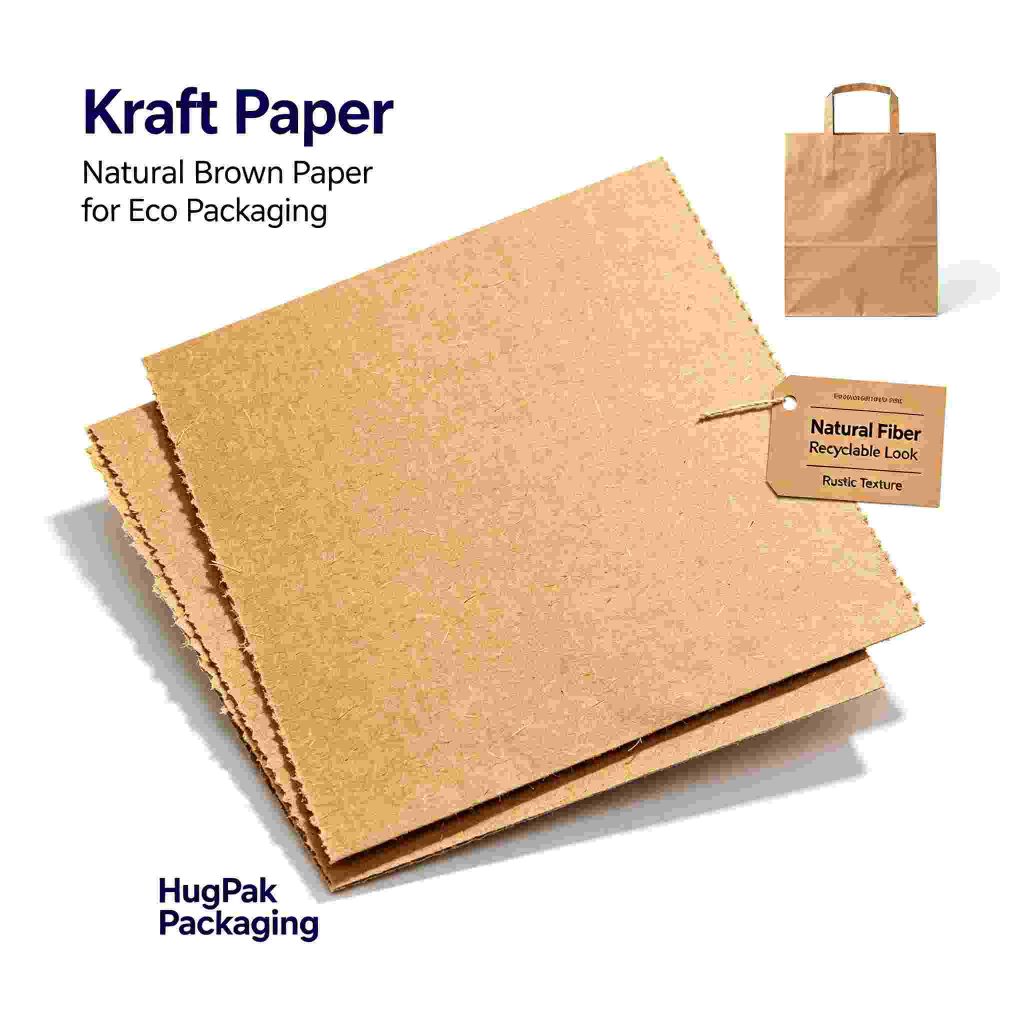
Kraft paper is a classic uncoated paper material known for its original brown texture, matte finish, and eco-friendly properties. It has become a mainstream packaging material for minimalist, natural, and sustainable brands in recent years.
Key Features of Kraft Paper
Kraft paper features a natural uncoated fiber texture with a pure matte finish. It is lightweight, flexible, tear-resistant, and high in tensile strength, making it extremely practical for foldable packaging designs. Most kraft packaging paper is recyclable and biodegradable, fitting eco-friendly brand standards. While it supports embossing, stamping, and simple logo printing, it works best for muted, earthy color schemes rather than bright, vivid designs.
Best Brand & Product Matches
If your brand targets natural, organic, minimalist, or eco-friendly positioning, kraft paper is your ideal box material. It is widely adopted for food packaging, snack boxes, organic fruit gift boxes, coffee packaging, candle boxes, daily product packaging, and small business retail boxes. It remains the top choice for sustainable brands focusing on zero-waste packaging and green marketing.
Pros of Kraft Paper
- Eco-friendly brand value: Matches green, organic, and sustainable brand concepts, easily resonating with environmentally conscious consumers.
- Cost-effective: Lower material and printing costs compared to coated art paper and grey board, ideal for bulk wholesale orders.
- Unique texture: The original natural texture creates a minimalist, casual, and high-end rustic style.
- Durable & flexible: Not easy to crack or deform, suitable for foldable packaging structures.
Cons of Kraft Paper
- Limited printing performance: Dark brown background makes bright, high-saturation colors inaccurate; fine pattern details are hard to present.
- Single finish: Cannot support ultra-glossy, mirror-like visual effects, limiting high-luxury customization.
- Average hardness: Lightweight kraft paper cannot bear heavy products and lacks strong compression resistance.
2. Coated Art Paper: High-Gloss, Vivid Printing & Premium Visuals
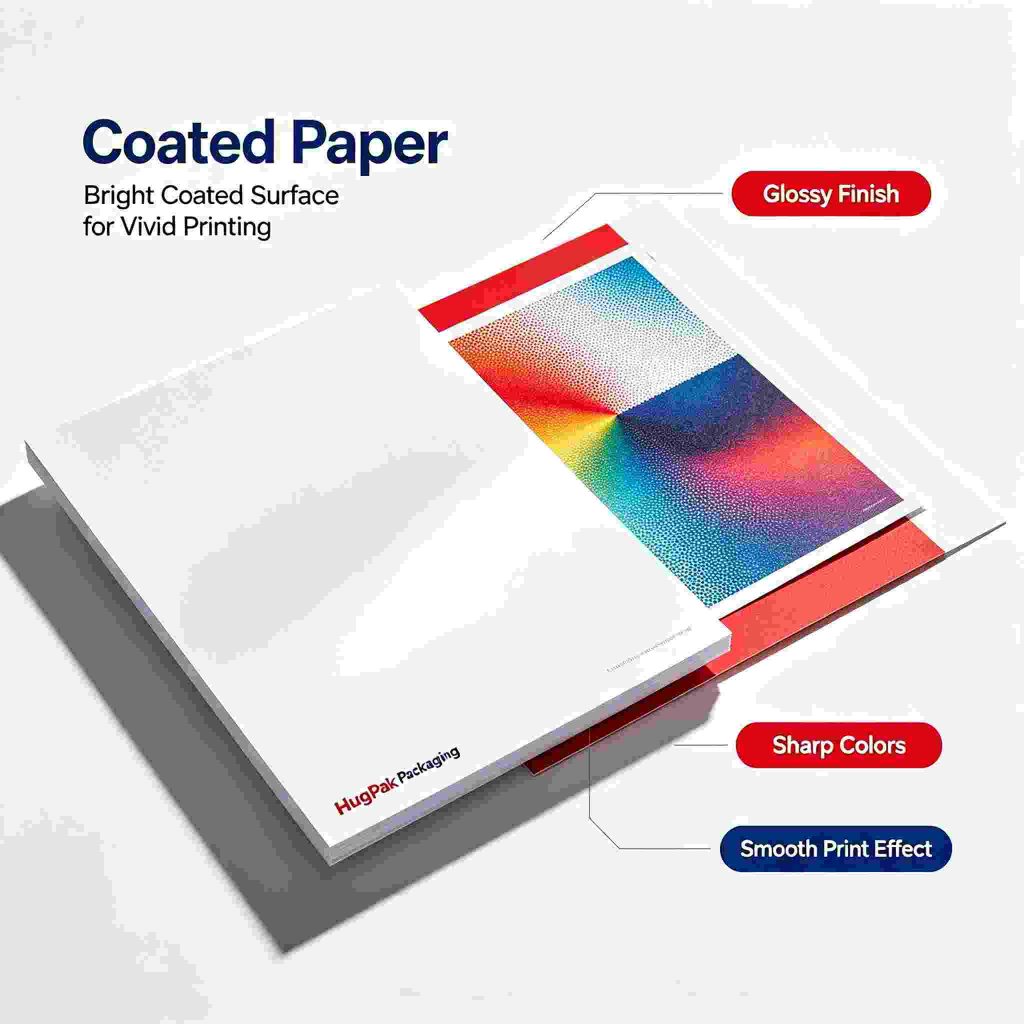
Coated art paper (also known as art paper) is a high-grade printing paper with a smooth, glossy or matte coated surface. It is the most popular material for brands that pursue exquisite printing, rich colors, and delicate packaging appearances.
Key Features of Coated Art Paper
Coated art paper is treated with a fine surface coating that removes rough paper fibers, delivering an ultra-smooth, flat, and delicate surface. It provides outstanding ink absorption and color accuracy, supporting high-quality CMYK full-color printing, UV coating, gold and silver stamping, embossing, and other premium finishing processes. Printed patterns, logos, and gradients appear bright, saturated, and highly detailed. With medium hardness and excellent flatness, it performs perfectly for retail shelf display and custom gift box packaging.
Best Brand & Product Matches
Coated art paper is the best packaging material for fashion, delicate, and mid-to-high-end consumer brands. It is commonly used for cosmetic boxes, skincare packaging, custom luxury gift boxes, printed fruit gift boxes, holiday festival packaging, toy boxes, and general retail product packaging. Businesses that prioritize eye-catching, high-resolution printed packaging mostly choose coated art paper for their wholesale custom boxes.
Pros of Coated Art Paper
- Excellent color reproduction: Restores 100% of design colors with no color deviation, perfect for complex logos, patterns, and gradient designs.
- Various finish options: Supports glossy lamination, matte lamination, soft touch lamination, and special craftsmanship to create diverse brand styles.
- Premium & neat appearance: Smooth surface makes the packaging look clean, delicate, and commercial-grade.
- Wide applicability: Balances beauty and cost, suitable for most mid-to-high-end retail products.
Cons of Coated Art Paper
- Lower environmental friendliness: The coating layer affects recycling efficiency, not suitable for strict zero-waste brand positioning.
- Less texture: Lacks natural fiber texture, unable to create rustic and minimalist organic styles.
- Average load-bearing capacity: Not suitable for heavy products or packaging that requires strong compression resistance.
3. Grey Board: Super Sturdy, High Hardness & Luxury Rigid Packaging
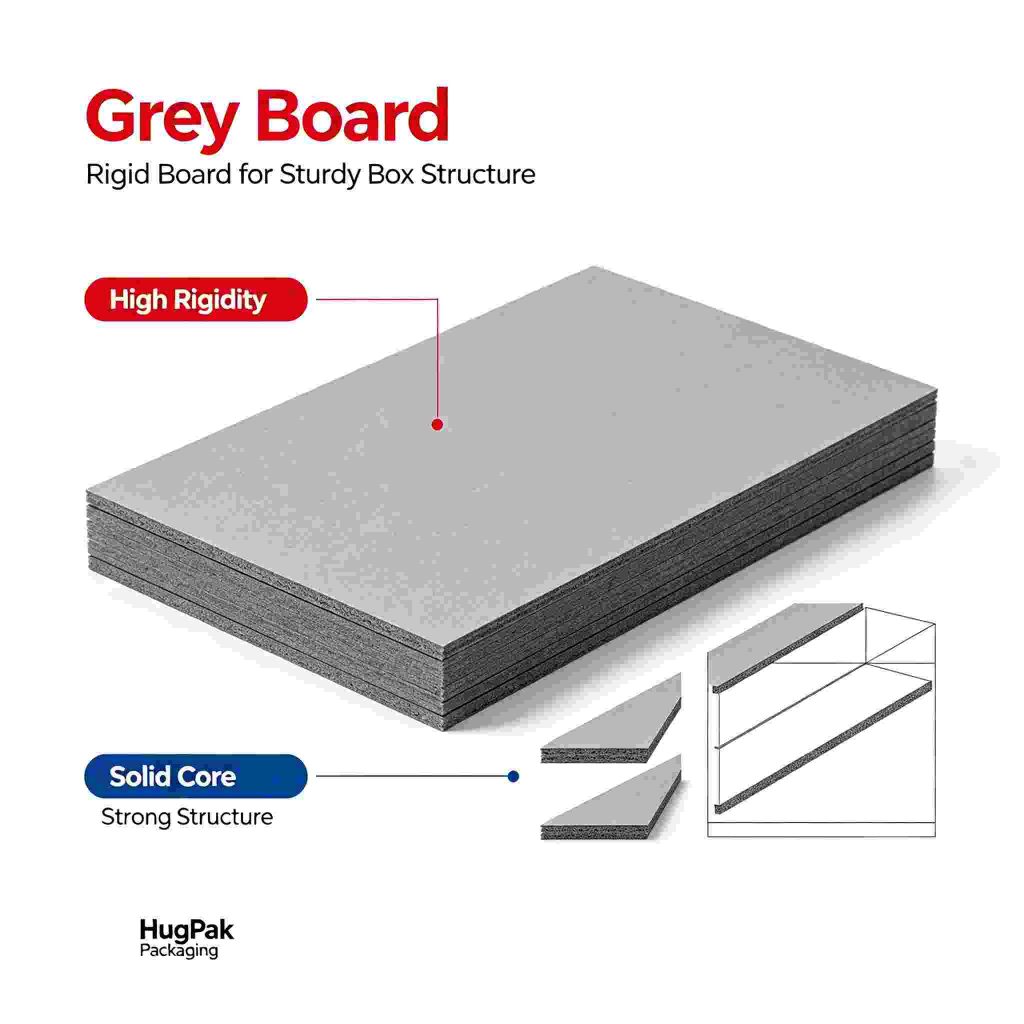
Grey board (also called grey cardboard or chipboard) is a high-density thick cardboard material with ultra-high hardness and strong compression resistance. It is usually used as the base material for rigid gift boxes, being the preferred material for high-end luxury packaging.
Key Features of Grey Board
Grey board (chipboard) is a high-density, thick cardboard material with exceptional sturdiness, flatness, compression resistance, and impact resistance. Unlike regular printing paper, grey board cannot be printed directly and is mainly used as a rigid base material for high-end rigid gift boxes. Manufacturers usually paste kraft paper or coated art paper on the grey board surface for custom printing and branding. It supports various premium box structures, including rigid flip boxes, drawer boxes, and lid & base gift boxes for high-value products.
Best Brand & Product Matches
Grey board is exclusively designed for luxury, high-value, and premium product branding. Typical applications include jewelry boxes, watch packaging, high-end cosmetic gift boxes, premium fruit gift boxes, wine packaging, electronic product gift boxes, and corporate luxury custom gifts. If you want sturdy, reusable, high-grade rigid packaging, grey board is the ultimate box material option.
Pros of Grey Board
- Ultra-high durability: Hard and sturdy, not easy to deform or crush, providing all-round protection for high-value products.
- Luxury rigid box effect: Creates a three-dimensional, straight, and high-end box shape, greatly improving the grade of products.
- Strong practicability: Reusable packaging structure, improving customer reuse rate and brand exposure.
- Customizable thickness: Supports different thickness specifications to meet the packaging needs of different heavy and high-value products.
Cons of Grey Board
- Higher cost: Material and processing costs are higher than kraft paper and coated art paper, suitable for high-end positioning products.
- Heavier weight: Increases packaging weight and shipping costs for bulk orders.
- Cannot print directly: Needs surface pasting with art paper or kraft paper for printing, with complex production processes.
Kraft vs Coated Art Paper vs Grey Board: Quick Comparison Table
| Material | Texture & Finish | Printing Effect | Hardness & Durability | Price Level | Brand Style |
|---|---|---|---|---|---|
| Kraft Paper | Natural matte fiber texture | Simple colors only, low saturation | Soft & flexible, low compression resistance | Low | Eco-friendly, minimalist, casual |
| Coated Art Paper | Smooth glossy/matte surface | Vivid, high-precision full-color printing | Medium hardness, flat & neat | Medium | Exquisite, fashionable, commercial |
| Grey Board | Rigid thick board, customizable surface finish | Depends on surface pasted paper | Super hard, compression & deformation resistant | High | Luxury, high-end, premium |
How to Choose the Right Box Material for Your Brand?
Choosing between kraft paper, coated art paper, and grey board is simple once you evaluate your brand positioning, product value, target audience, and packaging budget. Below is a clear selection rule for your custom box wholesale:
Choose Kraft Paper if your brand focuses on environmental protection, natural and minimalist style, your products are daily consumer goods or food, and you have a limited bulk packaging budget.
Choose Coated Art Paper if you need exquisite full-color printing, pursue delicate packaging appearance, and your products are mid-priced retail goods that need to attract young consumers.
Choose Grey Board if your products are high-value luxury goods, you need rigid box support, and you want to create a high-end brand image and advanced unboxing experience.
Final Thoughts
When it comes to custom packaging boxes, there is no universal “best” material — only the most suitable one for your brand. Kraft paper delivers natural, eco-friendly aesthetics; coated art paper provides vibrant, commercial-grade printing effects; grey board creates solid, luxury rigid packaging structures.
By understanding the key differences between kraft paper, coated art paper, and grey board, you can avoid mismatched packaging choices, improve your unboxing experience, optimize packaging costs, and effectively elevate your brand competitiveness in the retail and gifting market.
Need professional advice on box material selection for your custom printed boxes? Contact our packaging experts today for free material recommendations, custom designs, and competitive wholesale pricing.

